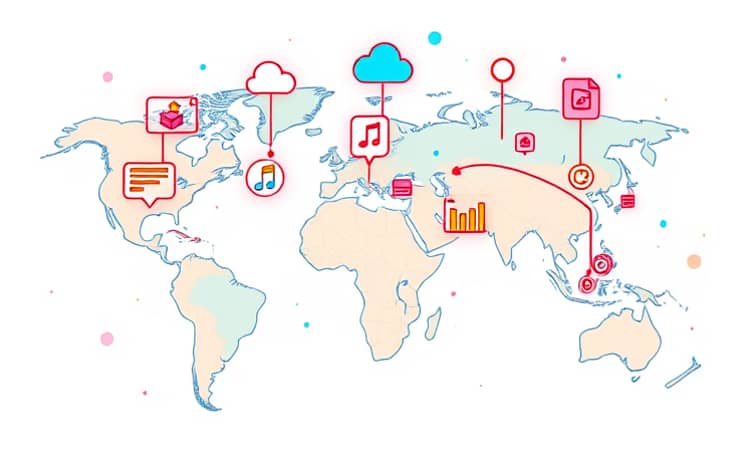
In the digital era, businesses face the challenge of expanding into competitive global markets with limited resources.
The freemium model offers a brilliant solution by blending free access with premium upgrades to drive growth.
By providing a basic version for free, companies can lower entry barriers and attract millions of users worldwide.
This approach transforms how startups and enterprises scale across borders, leveraging cost-effective strategies.
Freemium models empower innovation by allowing users to experience value without financial risk.
They build trust and foster organic adoption, setting the stage for sustainable global expansion.
Understanding the Freemium Model
Freemium is a business model where a core product or service is offered for free indefinitely.
Users can upgrade to paid versions for advanced features, higher capacity, or ad-free experiences.
The term originated in 2006 from Fred Wilson and Jared Lukin, combining "free" and "premium."
Unlike time-limited trials, freemium versions are permanent, encouraging long-term engagement.
This model is widely used in various domains to reduce acquisition costs and build user bases.
- SaaS and B2B software applications.
- Mobile apps, productivity tools, and online games.
- Music streaming and cloud storage services.
- Communication platforms and collaborative tools.
Strategic objectives include generating viral marketing and expanding market reach efficiently.
Economic Dynamics and Key Performance Indicators
The financial viability of freemium models hinges on carefully balanced revenue streams and metrics.
Income is typically derived from multiple sources to ensure profitability and scalability.
Key metrics must be monitored to assess performance and guide strategic decisions.
- Conversion rate from free to premium users, often ranging from 2% to 5%.
- Lifetime Value (LTV) of paying customers to predict long-term revenue.
- Customer Acquisition Cost (CAC), which should be minimized through viral growth.
- Cost of serving free users, including infrastructure and support expenses.
- LTV/CAC ratio and time to recover acquisition costs for sustainability.
- Retention and churn rates to measure user loyalty and engagement.
Optimizing these metrics ensures that the freemium model remains profitable and scalable.
Designing for Conversion and Growth
Effective product design is crucial for balancing free offerings with premium incentives.
The goal is to provide enough value in the free version to attract users while reserving premium features for upgrades.
Free plans should include useful basic functionality with clear limits to encourage upgrades.
- Basic tools for everyday tasks and collaboration.
- Limited storage, projects, or user slots to prompt scaling needs.
- Features that enable sharing and referrals to drive viral growth.
Premium features should offer significant added value to justify the cost.
- Advanced automation, security, and reporting capabilities.
- Higher scalability with unlimited resources or commercial use.
- Removal of ads, watermarks, and other restrictions for a seamless experience.
Upsell triggers should be strategically placed to convert free users at the right moments.
- When users hit capacity limits, such as storage or project counts.
- Upon requesting advanced features that are locked in the free version.
- Through in-app messages and email campaigns based on usage patterns.
- By offering time-limited trials of premium features to free users.
This design approach fosters a smooth path to conversion and maximizes revenue potential.
Navigating Globalization: Payment, Pricing, and Localization
Expanding freemium models globally requires adapting to diverse markets and regulations.
Payment methods must cater to local preferences to reduce friction for potential customers.
Accepting multiple payment options like credit cards, digital wallets, and regional methods is essential.
Pricing strategies should consider currency fluctuations and purchasing power parity.
Offering tiered plans with localized pricing can enhance affordability and uptake in different regions.
Localization goes beyond translation to include cultural adaptation of content and user interfaces.
- Adapting marketing materials and product features to local languages and norms.
- Complying with data privacy regulations like GDPR in Europe or similar laws elsewhere.
- Understanding competitive landscapes to differentiate offerings effectively.
Regulatory compliance is critical to avoid legal issues and build trust with international users.
By addressing these elements, businesses can seamlessly enter and thrive in global markets.
Inspiring Case Studies and Practical Insights
Real-world examples demonstrate the power of freemium models in achieving global success.
Dropbox is a classic case, offering 2 GB of free storage with options to earn more or upgrade.
With approximately 100 million users, a 4% conversion rate to premium supports the entire user base.
This generates around $270 million annually, showcasing how a small paying segment can sustain growth.
Other notable examples include Spotify, which uses freemium to dominate music streaming worldwide.
By providing ad-supported free access, it builds a massive audience and converts users to premium subscriptions.
For practical application, startups should focus on iterative testing and data-driven adjustments.
- Continuously monitor user behavior to refine free and premium offerings.
- Leverage analytics to identify high-potential segments for targeted marketing.
- Experiment with different pricing tiers and upsell triggers to optimize conversion.
- Foster community engagement to enhance retention and referral rates.
- Stay agile in adapting to market feedback and technological advancements.
These strategies empower businesses to harness freemium models for sustainable global expansion.
Embrace the freemium approach to unlock new opportunities and drive innovation across borders.